A Dividend from the Sky
What South Korea’s Rural Pilot Reveals About the Future of Shared Prosperity

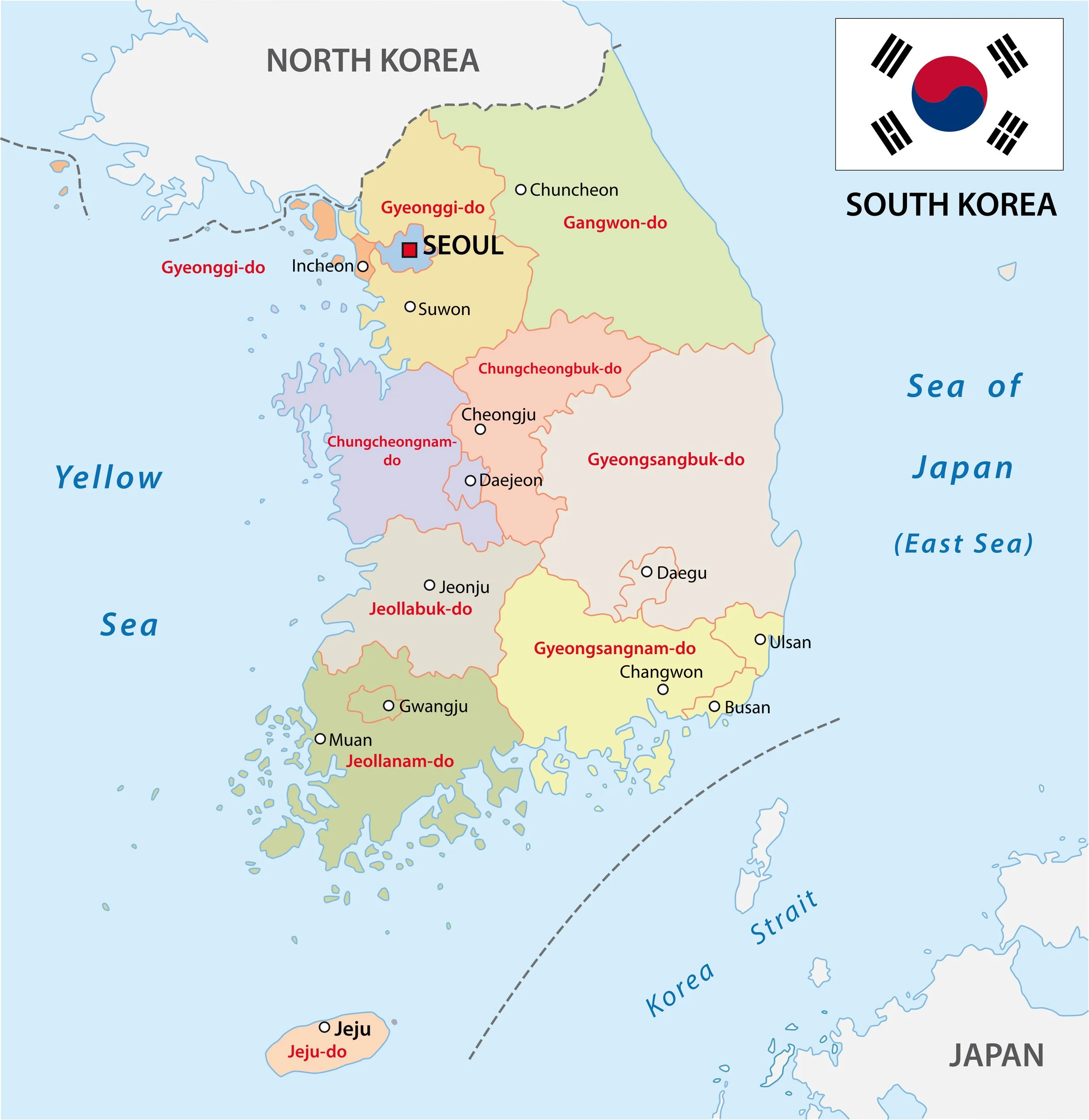
On the southwestern edge of South Korea, where the Yellow Sea touches a scatter of quiet islands, a bold idea has taken root. The archipelago of Sinan once depended on salt farming and small-scale fishing. Today it hosts one of the world’s clearest demonstrations of a simple but powerful proposition: sunlight can fund a universal income.
Since 2018, Sinan has turned fallow salt flats and coastal waters into solar cooperatives owned by local residents. Panels harvest sun, electrons flow, and profits circulate back to the community. Every quarter, islanders receive dividends ranging from about seventy-five to four hundred and fifty dollars. The sun rises, and a payment arrives. It feels almost mythic, yet it is simply good systems design.
Beginning in 2026, South Korea will scale this model across seven rural counties, each facing the familiar pressures of outmigration, aging populations, and shrinking local economies. Every resident will receive roughly one hundred and ten dollars per month, issued in a local currency that can only be spent within the county. This detail matters. When earlier programs in Gyeonggi Province used similar local vouchers, merchants reported revenue increases approaching fifty percent. Money stayed in motion instead of leaking to distant platforms or corporate retailers.
The principle behind the Korean pilot mirrors the structure at the heart of the Prosperity Loop. Value remains in circulation rather than draining outward. Communities become shareholders in the resources around them. Climate action ceases to be a cost and becomes a source of income. And households experience the clean-energy transition not as a distant abstraction, but as a monthly deposit.
The early response inside Korea has been startling. After the pilot counties were announced, some regions saw population increases within weeks. Namhae added more than six hundred residents in a single month. Cheongyang grew by four hundred. Critics call this migration a zero-sum reshuffling, but supporters note that no other rural policy in decades has produced even temporary reversal of demographic decline. This is what happens when policy becomes tangible.
The Korean initiative is also a rare example of climate, equity, and economic resilience aligned rather than competing. Many nations face the same pattern: resources flow outward, profits accumulate elsewhere, and communities that host the land, wind, and sun capture a fraction of the value. The Prosperity Loop calls for reversing this pattern through four interacting flows. Markets generate wealth. Commons fees channel value that once leaked away. A national wealth fund grows shared assets. A universal dividend distributes the returns. The shape resembles a torus, not a pipeline.
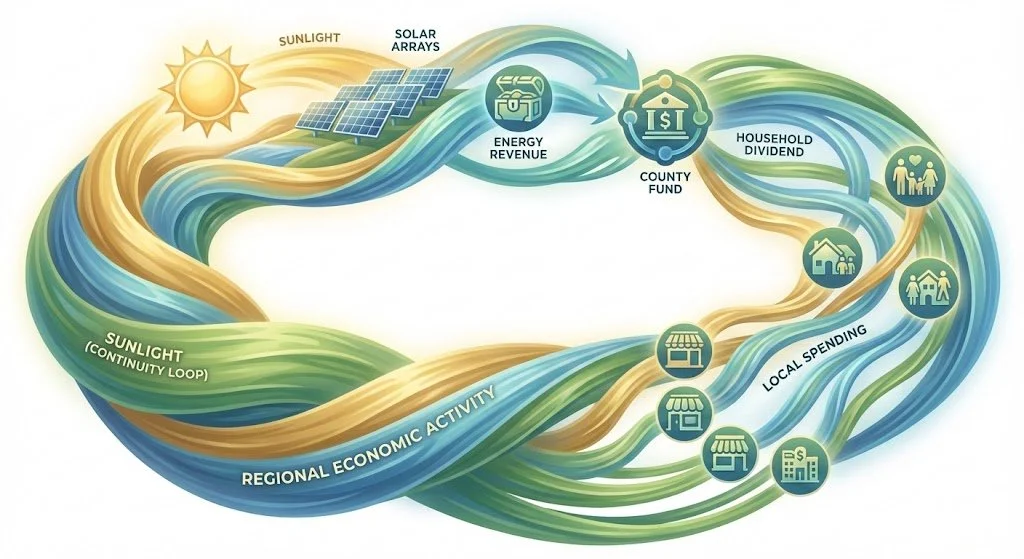
Korea’s version is not yet national, but it is unmistakably toroidal in structure. Solar and wind installations generate revenue. Local governments and cooperatives claim a share. Funds pool the returns. Dividends flow to every resident. Spending recirculates within the local economy. Each node feeds the next. The result is a self-reinforcing loop rather than a one-directional subsidy.
The political lesson is equally important. Climate benefits are usually described in global or generational terms. Lower temperatures by 2100. Fewer storms in the decades ahead. These outcomes matter, but they do not change anyone’s grocery bill next month. The sunshine pension flips the incentive structure. Residents see the solar arrays on the hillside and connect them directly to the meals they purchase, the hardware they repair, or the childcare they can now afford. Clean energy becomes a source of local prosperity and personal security.
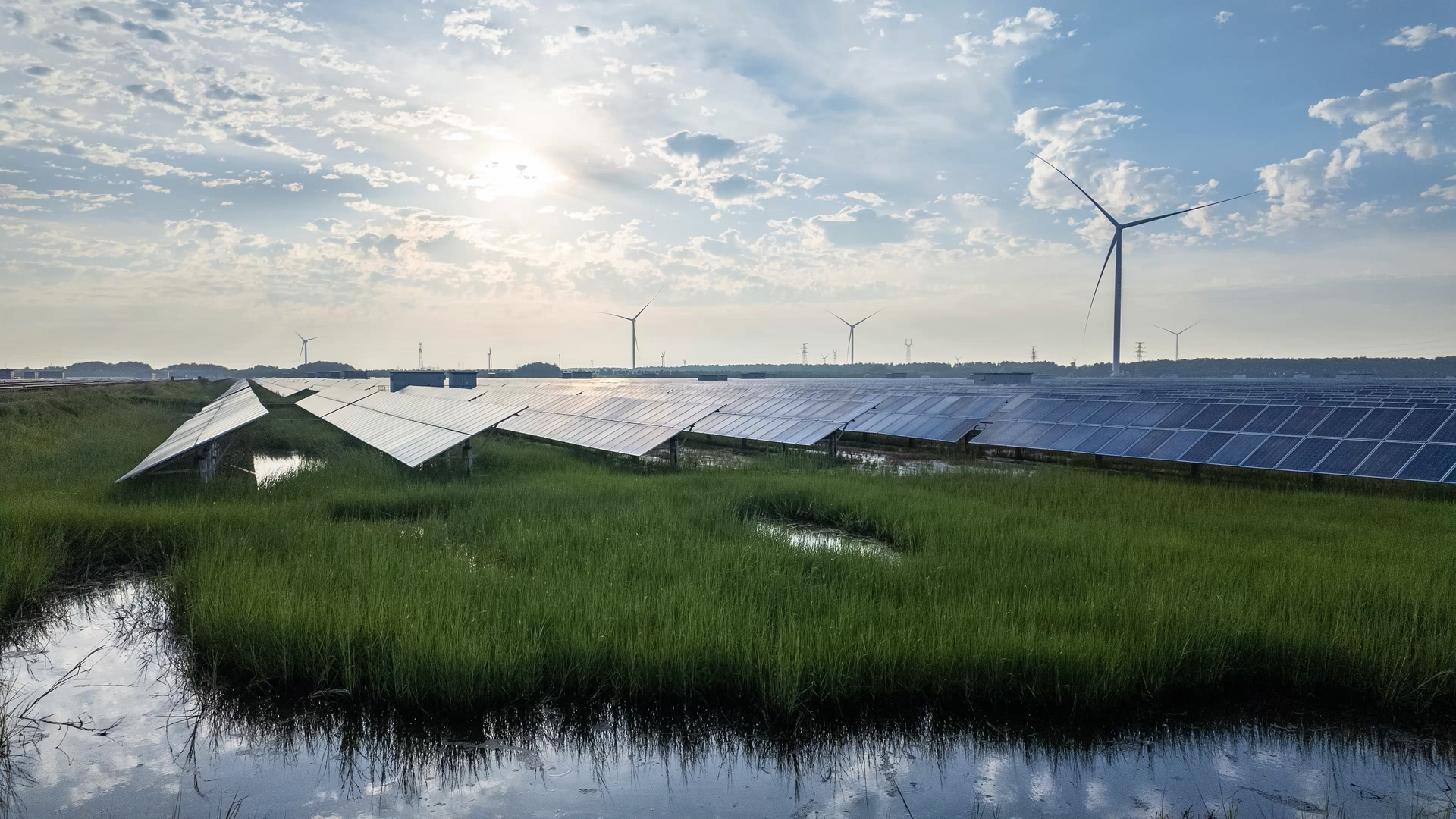
None of this guarantees success. Korea will still need to prove that the payments are fiscally durable, large enough to matter, and resilient to political turnover. Yet the design is sound. Renewable energy is an inexhaustible commons. Properly governed, its revenue does not deplete but compounds.
The deeper message is that communities thrive when value flows in loops rather than lines. Korea is showing the world how sunlight can become income, how climate action can become economic security, and how rural revitalization can begin with something as simple and ancient as the rising sun.